Monoblock Pump, Jet Pump
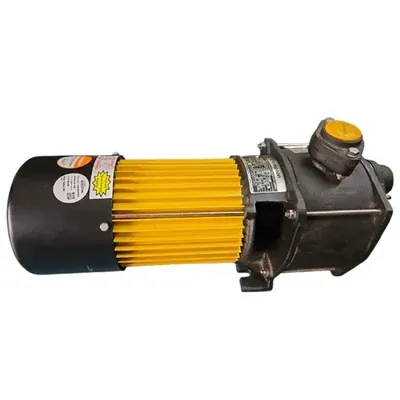
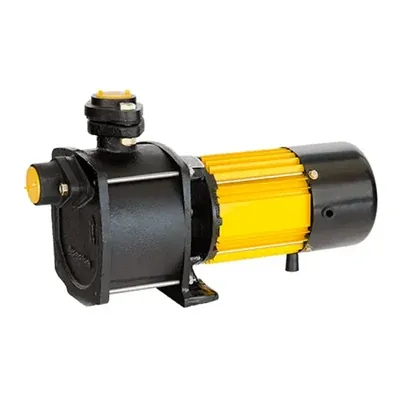
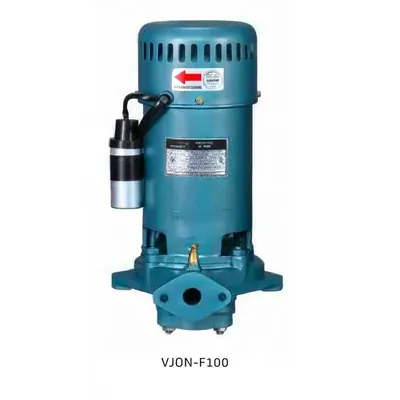
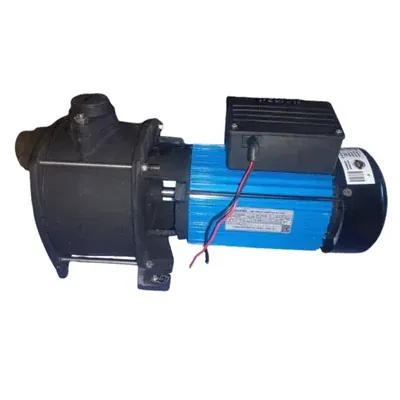
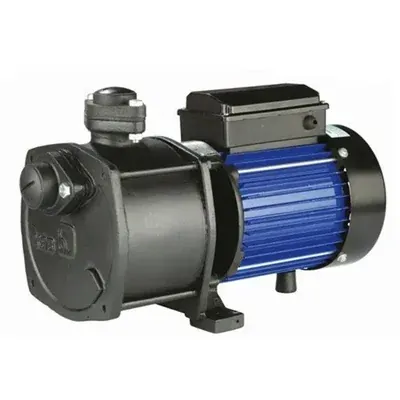
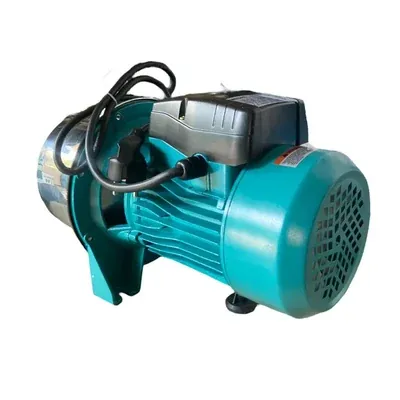
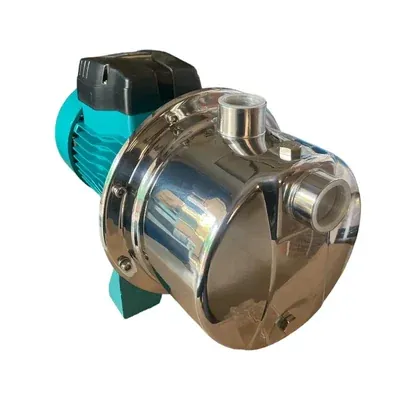
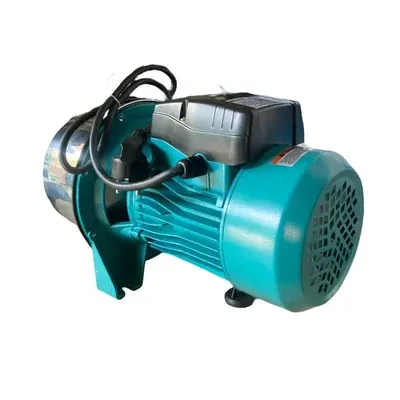
Top 8 Best-Selling Monoblock Pump, Jet Pump price list for October 2026
Monoblock Jet Pump: When Suction Lift Decides the Purchase
A monoblock jet pump is a self-priming centrifugal pump with an ejector at its inlet, built to pull water up from a source that sits below the pump. Choose one when the water is in a sump, open well or shallow bore and an ordinary pump keeps losing prime. It is a small, specialised corner of the water pumps and motors range.
A standard monoblock pump is designed to push water onward from a tank or a flooded inlet, while a jet pump is designed to draw it up first. This page covers only that drawing job. For HP and delivery on a regular monoblock, use that page.
ToolHaat lists only eight jet pump models, mostly 1 HP and single phase. With a choice that narrow, the first question is whether a jet pump suits your water source at all.
How the Ejector Inside a Jet Pump Works
The ejector is a nozzle followed by a narrowing tube called a venturi, and it uses a fast stream of the pump's own water to create suction at the inlet. Part of the water leaving the impeller is sent back through the nozzle. It speeds up, the pressure in front of the venturi falls, and the air pressure pressing on the water in your sump or well pushes more water into that low-pressure zone.
The mixed flow then reaches the impeller. Some of it goes to your delivery pipe and the rest circulates again as drive water, which is why a jet pump is generally less efficient than a plain centrifugal pump of the same HP.
The ejector helps the pump start and hold suction, but it cannot beat atmospheric pressure. It does not turn a surface pump into a deep-water pump.
Suction Lift: How Far Below the Pump the Water Can Sit
For a surface-mounted jet pump, plan on roughly 6 to 7 metres between the pump and the lowest water level as a practical ceiling, and treat anything close to that as risky. This is a rule of thumb, not a rating. Atmospheric pressure can support a column of about 10 metres in theory, but friction in the suction pipe, bends and a worn foot valve all take their share.
Measure from the pump inlet to the lowest water level of the year, not the level you see after the monsoon, and compare the result with the suction figure on the product page.
As an illustration, take a sump whose water drops to 5 m below the pump in May, with a roof tank 12 m above the pump. Suction needs about 5 m of lift plus friction, and delivery needs about 12 m of head plus friction. A pump must pass both checks.
| Lowest water level below the pump | What it means in practice |
|---|---|
| Up to about 3 m | Comfortable. A self-priming standard monoblock may also cope |
| About 3 to 6 m | Jet pump territory. Keep the suction pipe short and airtight |
| About 6 to 7 m | At the edge. Lower the pump if possible and check the rated lift |
| Beyond about 7 m | A surface pump will struggle. Consider a submersible |
Elsewhere in the market, a twin-pipe arrangement puts the ejector down in the well so it pushes water up instead of sucking it. That reaches deeper but recirculates more water. One V-Guard model here has "twin type" in its name, so read its product page for the pipe arrangement and depth.
Priming a Jet Pump and Keeping It Primed
A jet pump needs its casing filled with water before the first start, and after that it should pick up suction by itself as long as the suction line does not leak air. Most "not lifting water" complaints trace back to air in the suction line, not a weak motor.
Check this before switching on:
- Fill the casing through the priming port until water overflows, then close the plug firmly.
- Fit a foot valve with a strainer at the bottom of the suction pipe so the line stays full after the pump stops. Foot valves and fittings are listed under pump accessories.
- Run the suction pipe as one rising line with no high points where air can collect.
- Never use suction pipe narrower than the pump inlet.
- Wrap every threaded joint with thread tape, because a pinhole that leaks only air breaks prime.
If no water arrives within a few minutes, switch off and re-check the line instead of letting the pump run dry. Dry running damages the seal. Have an electrician do the wiring with proper earthing, because pumps stand near wet ground.
Shallow Well, Self Priming and Twin Type: Reading the Names
The words in a jet pump's name describe its design, but each still needs a product-page check. The table uses terms from names in the range.
| Term in the name | What it suggests | What to confirm |
|---|---|---|
| Shallow well | Made for water close to the pump | Rated suction lift |
| Self priming | Draws water after the first fill without manual help each time | Priming steps |
| Twin type | Not explained by the name alone | Pipe arrangement and depth |
| SS | Usually stainless steel | Which part is stainless |
If a name and a product page disagree, trust the product page.
Reading Max Head, LPM and Pipe Size on a Jet Pump
Max head is the highest the pump can push water at almost no flow, so the head you can use is always lower. The head you need is the vertical height to the top of your tank plus an allowance for pipe friction. As a rough rule, count about 3 metres per floor of building.
Flow is shown in two ways in this range. Some names give LPH (litres per hour) and some give LPM (litres per minute). Divide LPH by 60 to compare them: a 3,000 LPH pump is about 50 LPM, and 2,400 LPH is about 40 LPM. Heads appear in metres and feet too, and 118 ft is roughly 36 m.
A size such as 25 x 25 mm reads as suction by delivery, so both ports are about one inch. Use pipe at least that size, because a narrower suction line adds friction and cuts usable lift.
Which Water Source Suits a Jet Pump
Use a jet pump when the water stays within a few metres below the pump and a short suction pipe can reach it. Match your source with these rules:
- If water sits in a ground-level sump or underground tank and must reach a roof tank, a jet pump suits well, provided the roof tank height is inside the pump's usable head.
- If the source is an open well with water a few metres down, a jet pump can work, but check the summer level first. For irrigation duty see open well pumps.
- If water is in a borewell whose level falls past about 7 m in summer, choose a submersible pump instead.
- If the inlet is flooded or the water is above the pump, a standard monoblock is simpler.
Almost every model listed is single phase, which suits home supply. If you need three phase for a farm, send the HP and phase through a quote request, and see agricultural tools for the drip and sprinkler gear that sits downstream.
Power, Voltage and Running Habits
A 1 HP single phase motor draws a heavy current at start-up, so a weak or fluctuating supply is a common cause of tripping and overheating. Check the voltage range on the nameplate and consider a voltage protector if your area sees frequent drops.
Do not run a jet pump against a closed delivery valve for long, because the water inside heats up and the seal suffers.
A pump that worked in the monsoon may lose suction in summer as the water table falls. Lowering it by even a metre toward the water can recover that margin.
The ToolHaat Jet Pump Range, Honestly
The range holds eight models from Crompton, V-Guard and KSB plus three unbranded Heavy Duty listings, with prices from roughly ₹7,700 to ₹14,500. Six of the eight are 1 HP, one is 0.75 HP and one is 1.5 HP. Compare each spec line with your own duty, because eight models will not cover every need.
A few starting points, described only as the product names describe them:
- Heavy Duty 1 HP Single Phase Jet Pump lists 40 m max head and 3,000 LPH.
- KSB 1 HP Perijet G1 is a self-priming centrifugal jet pump with a 39 m head.
- V-Guard NOVA-SWF120 is a shallow well jet pump with 118 ft max head and 61 LPM.
- V-Guard VJON-F100BW is a twin type pump with 98 ft max head and 26 LPM.
If you need a size, phase or brand that is not listed, send the details through a quote request.
Ordering, GST Invoice and Returns
Every ToolHaat order comes with a GST invoice, and each product page shows tiered pricing and the minimum order quantity. For dealers or projects needing several units, the quote request page is the right route. Delivery covers all of India, and orders above ₹2,000 ship free under the shipping policy.
If an item arrives damaged or wrong, raise a return or replacement request within 24 hours of delivery with an unboxing video, and send the item back within 3 days, as set out in the cancellations and returns policy. Manufacturer warranty claims follow the warranty policy. For help choosing, call or WhatsApp +91 92755 06722 or write to support@toolhaat.com.